The business loan landscape in 2026 is evolving rapidly, driven by strong economic recovery, digital lending growth, and changing borrower behavior. Recent developments indicate that access to credit is improving for businesses, especially small and medium enterprises (SMEs), but challenges such as rising defaults and cautious lending practices remain.
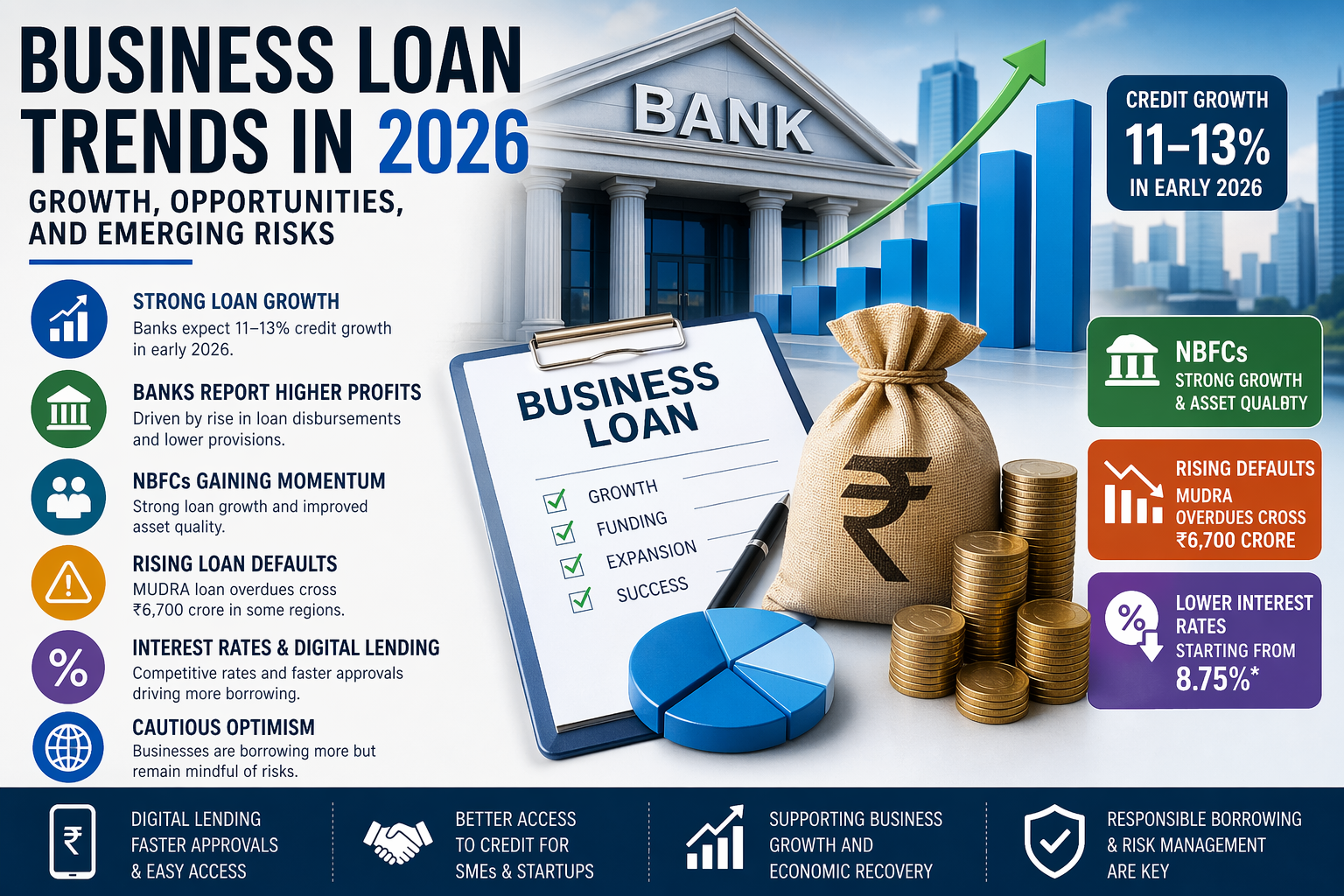
One of the most significant trends this year is steady loan growth across banks. According to recent industry surveys, Indian banks are expecting credit growth of around 11”“13% in early 2026, supported by stable economic conditions and improved balance sheets. This growth reflects increased demand for business loans as companies expand operations, invest in infrastructure, and recover from past disruptions.
Private sector banks are also reporting strong performance. For example, ICICI Bank posted higher-than-expected profits in 2026, driven by a sharp rise in loan disbursements, including business and corporate lending. This indicates that businesses are actively borrowing and that banks are more confident in lending compared to previous years.
At the same time, non-banking financial companies (NBFCs) are playing a crucial role in expanding credit access. Firms like HDB Financial Services have reported strong growth in loan portfolios and improved asset quality, highlighting the rising importance of alternative lenders. NBFCs are particularly important for small businesses that may not qualify for traditional bank loans.
However, not all signals are positive. A growing concern in 2026 is the increase in loan defaults in government-backed schemes. Under the Pradhan Mantri MUDRA Yojana, overdue loans have risen significantly, crossing ₹6,700 crore in some regions. Experts warn that rapid loan disbursement without proper borrower assessment may lead to long-term financial stress and reduced effectiveness of such schemes.
Another key development is the impact of interest rates on borrowing decisions. With the Reserve Bank of India maintaining relatively stable policy rates, borrowing costs have become more predictable. In 2026, business loan interest rates in India generally range from around 9% to 30%, depending on the lender and borrower profile. Lower interest rates are encouraging businesses to take loans, but lenders are still cautious about high-risk segments.
Additionally, digital lending and faster approvals are reshaping the business loan ecosystem. Many lenders now offer instant approvals, minimal documentation, and customized loan products. Personal and business loans are becoming more flexible, with some starting interest rates as low as 8.75% for certain borrower categories. This trend is particularly beneficial for startups and small enterprises that need quick access to funds.
Globally, the SME lending environment is also showing signs of recovery. While loan volumes are increasing, many businesses remain cautious about borrowing due to economic uncertainties. This cautious optimism is reflected in India as well, where businesses are balancing growth ambitions with financial discipline.
Conclusion
Overall, 2026 presents a mixed but promising outlook for business loans. On one hand, strong credit growth, digital innovation, and supportive policies are improving access to finance. On the other hand, rising defaults and cautious lending highlight the need for responsible borrowing and better risk management.
For businesses, the key takeaway is clear: opportunities to secure funding are increasing, but careful planning, strong financials, and smart borrowing decisions are more important than ever.