How to Get a Heavy Equipment Loan for Your Construction Business?
The construction industry relies heavily on specialized machinery and equipment to complete projects efficiently and on time. However, purchasing heavy equipment such as excavators, bulldozers, loaders, cranes, and backhoes often requires a significant investment. For many construction businesses, a heavy equipment loan can be an effective financing solution that helps acquire essential machinery without disrupting cash flow.
This guide explains how to get a heavy equipment loan for your construction business and the key factors lenders consider during the approval process.
What Is a Heavy Equipment Loan?
A heavy equipment loan is a type of business financing designed specifically for purchasing construction and industrial machinery. The equipment itself often serves as collateral, making it easier for businesses to access funding while preserving working capital.
These loans can be used to purchase:
- Excavators
- Bulldozers
- Backhoe loaders
- Cranes
- Road construction machinery
- Forklifts
- Concrete mixers
- Earthmoving equipment
- Material handling equipment
Why Consider a Heavy Equipment Loan?
Heavy equipment financing offers several advantages for construction businesses:
Preserve Business Cash Flow
Instead of paying the full purchase price upfront, businesses can spread the cost over manageable monthly installments.
Access Modern Equipment
Financing allows companies to invest in advanced machinery that improves productivity and operational efficiency.
Flexible Repayment Options
Many lenders offer repayment tenures that align with the equipment's expected lifespan and business revenue cycle.
Support Business Growth
Having the right equipment enables businesses to take on larger projects and increase profitability.
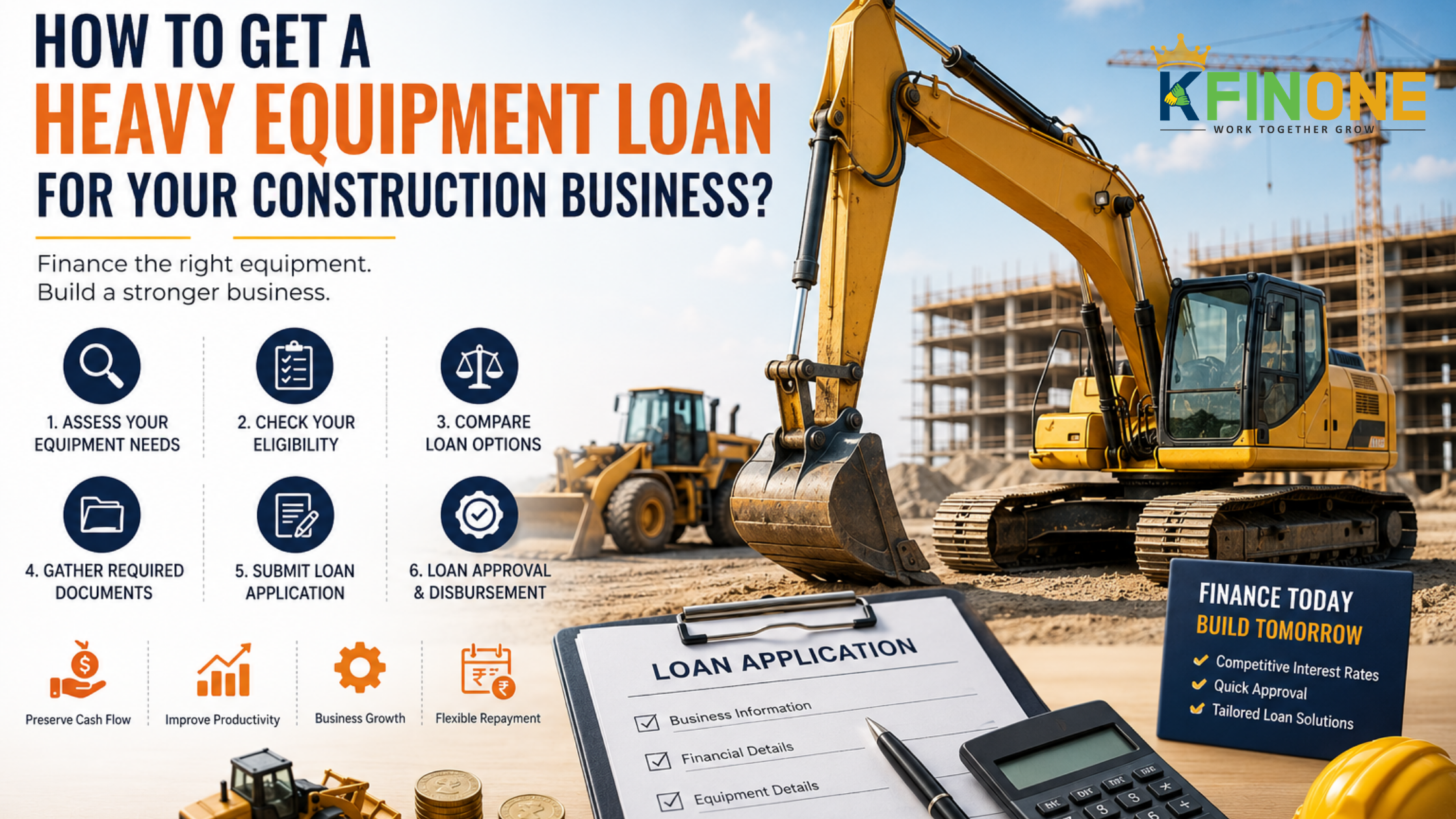
Steps to Get a Heavy Equipment Loan
1. Assess Your Equipment Requirements
Start by identifying the machinery needed for your projects. Consider factors such as:
- Equipment type
- Usage frequency
- Project requirements
- Purchase cost
- Maintenance expenses
A clear understanding of your equipment needs helps determine the loan amount required.
2. Check Your Business Eligibility
Lenders generally evaluate:
- Business vintage
- Annual turnover
- Financial stability
- Credit history
- Existing debt obligations
- Repayment capacity
Maintaining organized financial records can improve your chances of approval.
3. Compare Loan Options
Different lenders may offer varying terms and conditions. Compare factors such as:
- Interest rates
- Loan tenure
- Down payment requirements
- Processing fees
- Prepayment options
- Documentation requirements
Choosing the right financing option can reduce the overall borrowing cost.
4. Gather Required Documents
Typical documents required for a heavy equipment loan may include:
- Business registration certificate
- PAN and GST details
- Identity and address proof
- Bank statements
- Income tax returns
- Financial statements
- Equipment quotation or invoice
Having these documents ready can help speed up the application process.
5. Submit the Loan Application
Complete the lender's application form accurately and provide all supporting documents. Ensure that the information submitted matches your financial records to avoid delays.
6. Equipment Evaluation and Verification
The lender may evaluate:
- Equipment value
- Equipment condition (for used machinery)
- Business financial health
- Repayment ability
This assessment helps determine loan eligibility and financing terms.
7. Loan Approval and Disbursement
Once approved, the lender disburses the loan amount according to the agreed terms. In many cases, funds are paid directly to the equipment supplier.
Tips to Improve Loan Approval Chances
Maintain a Strong Credit Profile
A good credit history demonstrates responsible borrowing behavior and may help secure better loan terms.
Keep Financial Records Updated
Accurate bookkeeping and audited financial statements create confidence among lenders.
Choose Equipment with High Resale Value
Machinery that retains value can improve financing eligibility since it offers stronger collateral security.
Reduce Existing Debt
Lower debt obligations may improve your debt-to-income ratio and increase approval chances.
Provide a Reasonable Down Payment
Contributing a portion of the equipment cost may reduce lender risk and improve loan eligibility.
New vs. Used Equipment Financing
New Equipment Loans
- Higher financing availability
- Longer repayment tenures
- Lower maintenance concerns
- Latest technology and efficiency
Used Equipment Loans
- Lower purchase cost
- Faster return on investment
- Suitable for budget-conscious businesses
- May require equipment inspection
Businesses should evaluate operational needs and budget before choosing between new and used machinery.
Common Mistakes to Avoid
- Borrowing more than required
- Ignoring total financing costs
- Choosing unsuitable repayment terms
- Failing to compare multiple lenders
- Overlooking maintenance and operating expenses
- Submitting incomplete documentation
Avoiding these mistakes can help ensure a smoother financing experience.
Conclusion
A heavy equipment loan can be a valuable financial tool for construction businesses seeking to expand operations, improve efficiency, and take on larger projects. By understanding your equipment requirements, maintaining strong financial records, comparing loan options, and preparing the necessary documentation, you can improve your chances of securing financing that supports long-term business growth.
Investing in the right equipment through structured financing can help your construction business remain competitive while preserving working capital for day-to-day operations.