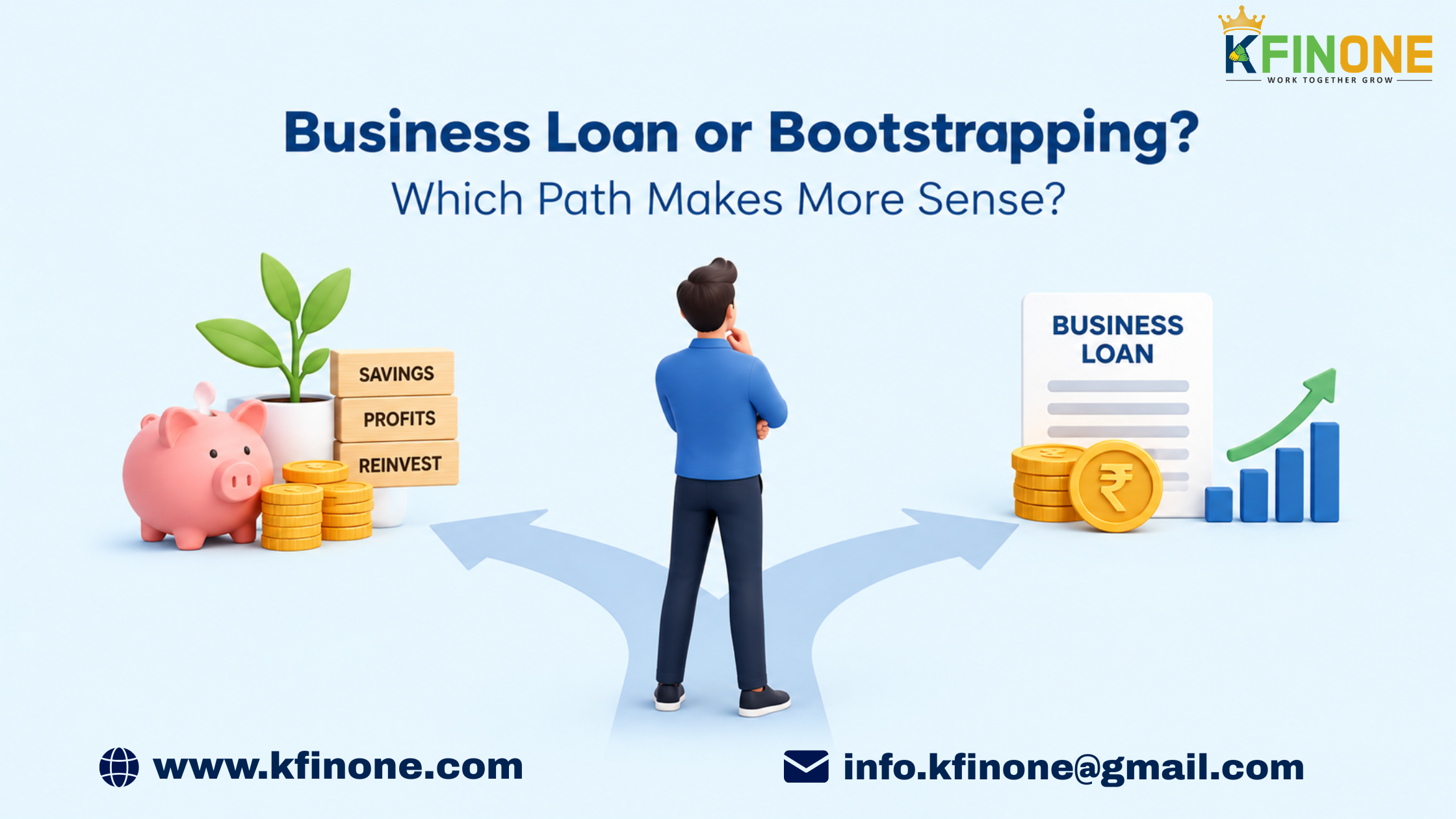
Business Loan or Bootstrapping? Which Path Makes More Sense?
Starting or expanding a business often requires more than a good idea. Entrepreneurs need sufficient funds to manage inventory, purchase equipment, hire employees, promote their products, improve technology, and handle everyday operating expenses. When additional capital is required, two common options are taking a business loan or bootstrapping the business with personal savings and internally generated funds.
Both approaches have advantages and limitations. The right choice depends on the business stage, funding requirement, cash flow, repayment capacity, and growth plans.
What Is Bootstrapping?
Bootstrapping means building or expanding a business primarily using the owner's personal savings, business revenue, or profits instead of relying on external borrowing.
For a small business with manageable expenses, bootstrapping can provide greater control over financial decisions. Since there is no loan repayment obligation, the business owner does not have to allocate a fixed amount toward monthly EMIs.
However, using only internal funds can also limit the speed at which a business grows. Spending too much of the available cash on expansion may leave insufficient funds for working capital or unexpected expenses.
What Is a Business Loan?
A business loan provides external funding that can be used for eligible business-related requirements. Depending on the lender and loan product, financing may support working capital, expansion, equipment purchases, inventory requirements, technology upgrades, or other business expenses.
The borrowed amount is generally repaid over an agreed tenure, along with applicable interest and other charges.
For businesses with predictable cash flows, external financing can provide access to capital without requiring the owner to use all available savings. However, borrowing creates a financial obligation, so repayment capacity should be considered carefully before applying.
Bootstrapping: More Control Over Your Money
One major attraction of bootstrapping is financial independence from lenders. Entrepreneurs can make decisions without having to meet a loan repayment schedule.
It may also encourage careful spending because the business is operating with limited resources. Owners may focus on essential expenses and gradually reinvest profits into the company.
The limitation is that growth may take longer when the available capital is restricted. A business may have to postpone purchasing equipment, increasing inventory, opening another location, or investing in marketing until sufficient funds are accumulated.
Business Loans: Access to Additional Capital
A business loan can provide access to funds when internal resources are not enough to meet an important business requirement.
For example, an established business may identify an opportunity to purchase new machinery or increase inventory before a busy season. Waiting several months to accumulate enough savings could delay the opportunity. External financing may allow the business to make the investment sooner, subject to lender approval and repayment capacity.
At the same time, the business must account for EMIs, interest costs, fees, and other applicable charges. Borrowing should therefore be connected to a realistic financial plan rather than simply increasing available cash.
Which Option Is Better for Working Capital?
Working capital requirements can fluctuate considerably. Businesses may need funds to purchase inventory, pay suppliers, manage operating expenses, or bridge temporary cash-flow gaps.
If the requirement is small and the business has sufficient reserves, using internal funds may be practical. However, using all available cash could reduce the financial cushion needed for emergencies.
A suitable business financing option may help preserve internal cash while providing additional funds for operations. The decision should depend on the amount required, expected cash inflows, and repayment capacity.
Consider the Cost of Growth
Bootstrapping may appear less expensive because there is no interest payment. However, there can still be an opportunity cost.
Suppose a business has enough savings to fund a small expansion, but using those savings would leave very little working capital. The owner may avoid borrowing but face cash-flow pressure later.
With a business loan, the cost is more visible because the business pays interest and applicable charges. However, keeping some internal funds available may provide additional flexibility.
Therefore, entrepreneurs should compare the overall financial impact rather than looking only at whether borrowing involves interest.
Think About Your Business Cash Flow
Cash flow is one of the most important factors when deciding between bootstrapping and borrowing.
A business with stable revenues and predictable monthly cash inflows may find it easier to plan loan repayments. On the other hand, a business with highly irregular income should carefully assess whether fixed repayments could create pressure during slower periods.
Before taking a loan, estimate expected monthly revenue, operating expenses, existing financial commitments, and the additional repayment obligation. This can help determine whether the proposed financing fits within the business's cash-flow structure.
Can You Combine Both Approaches?
Choosing between bootstrapping and a business loan does not always have to be an either-or decision.
Some entrepreneurs use a combination of personal or business funds and external financing. For example, an owner may contribute part of the required capital while using a loan to cover the remaining amount.
This approach can reduce the amount borrowed while allowing the business to retain some cash reserves. However, the structure should still be based on affordability and a clear repayment plan.
Questions to Ask Before Choosing
Before deciding how to fund your business, consider:
- How much capital do you actually need?
- Is the requirement for a short-term or long-term purpose?
- How much cash does the business currently have?
- Will using your savings leave enough emergency reserves?
- Can your business comfortably manage monthly repayments?
- What is the total cost of external financing?
- Will the borrowed funds contribute to revenue generation or operational efficiency?
- How would repayment be handled during a slower business period?
These questions can help turn a financing decision into a more structured business decision.
Make the Decision Based on Your Business Needs
There is no universal answer to whether bootstrapping or a business loan is the better approach. Bootstrapping can offer greater control and avoid borrowing costs, but limited capital may restrict the pace of expansion. A business loan can provide additional funds for growth or working capital, but it also creates repayment responsibilities.
The key is to understand your business's financial position, funding requirement, cash-flow pattern, and future plans before choosing an approach. Whether you use internal funds, external financing, or a combination of both, the objective should be to maintain financial stability while supporting sustainable business growth.