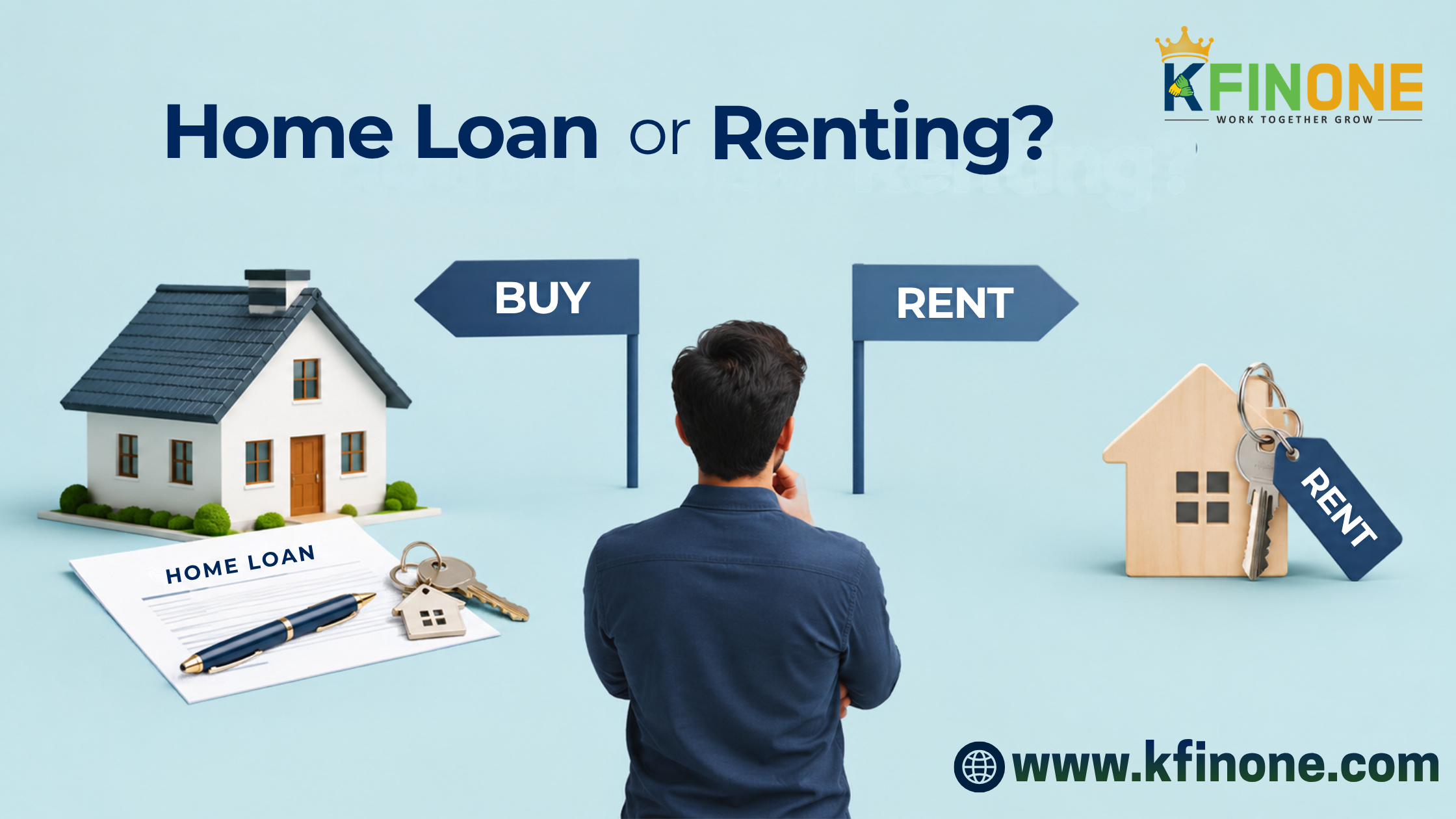
Home Loan or Renting? The Debate Every Homebuyer Should Understand
Choosing between buying a home with a home loan and continuing to rent is one of the biggest financial decisions many people face. Both options have advantages and challenges, and the right choice can depend on income, financial goals, location, lifestyle, and how long you plan to stay in one place.
While owning a home can provide long-term stability and a valuable asset, renting can offer flexibility and lower immediate financial commitments. Before making a decision, it is important to understand how both options can affect your finances over time.
Buying a Home With a Home Loan
For many buyers, purchasing a home outright is not financially practical. A home loan can make homeownership more accessible by allowing borrowers to spread the cost of a property over several years through EMIs.
One of the biggest advantages of buying is that your monthly EMI contributes toward owning an asset. Once the loan is fully repaid, the property becomes debt-free, subject to the terms of the loan and other applicable costs.
Homeownership can also provide a sense of stability. You have greater control over your living space and do not have to worry about a landlord deciding not to renew a rental agreement or changing the rent.
However, buying a property requires more than simply arranging the monthly EMI. Homebuyers should consider the down payment, registration charges, stamp duty, maintenance costs, insurance, property taxes, and other expenses associated with purchasing a home.
Renting Offers Greater Flexibility
Renting can be attractive for people who are not ready to make a long-term financial commitment. A rental arrangement generally requires less upfront capital than purchasing a property, although tenants may need to pay a security deposit and other moving-related expenses.
Another major advantage is flexibility. If your job requires relocation or you expect your personal circumstances to change, renting can make it easier to move to another location.
Renting may also allow you to direct some of your available money toward investments, emergency savings, education, business requirements, or other financial priorities.
However, rent does not create ownership of the property. Rental payments are an ongoing expense, and the amount may increase over time depending on the rental market and agreement with the landlord.
Compare the Total Cost, Not Just the EMI or Rent
One common mistake is comparing only the monthly home loan EMI with monthly rent. A proper comparison should consider the broader financial picture.
For a home purchase, calculate the down payment, loan interest, processing charges, property-related taxes, maintenance expenses, insurance, and other ownership costs. You should also consider the opportunity cost of using your savings for the down payment.
For renting, consider the monthly rent, security deposit, expected rent increases, maintenance responsibilities, and potential moving expenses.
The comparison becomes more meaningful when you consider how long you expect to stay in the property. Buying may require a longer time horizon to make the overall costs and benefits of ownership more meaningful, while renting can be more suitable when you expect to move within a relatively short period.
Consider Your Financial Stability
Your income and existing financial commitments should play an important role in the decision.
Before applying for a home loan, review your monthly income, existing EMIs, household expenses, emergency savings, and future financial responsibilities. A home loan EMI should fit comfortably within your budget rather than stretching your finances to the limit.
It is also useful to maintain an emergency fund before taking on a large long-term obligation. Unexpected medical expenses, job changes, family requirements, or other financial emergencies can affect your ability to manage regular repayments.
Renting may provide greater financial flexibility for someone who is still building savings or has unpredictable income.
Location and Property Prices Matter
The decision between renting and buying can change significantly depending on the location.
In areas where property prices are high compared with rental costs, renting may appear financially attractive in the short term. In other locations, purchasing a suitable property may align better with long-term housing plans.
Do not choose a home simply because a lender approves a particular loan amount. Instead, determine what property price and EMI fit your own financial capacity.
You should also consider the property's location, connectivity, infrastructure, employment opportunities, future development, and resale or rental potential.
Think About Your Long-Term Goals
Your personal and financial goals can influence the decision as much as the numbers.
If you want a permanent residence and expect to stay in the same city for many years, purchasing a home may provide long-term stability and the opportunity to build property ownership.
On the other hand, if you are starting a career, planning to relocate, building a business, or prioritising investments and savings, renting may provide useful flexibility.
Make the Decision After Comparing Both Options
Before choosing between a home loan and renting, prepare a realistic monthly budget and compare the long-term financial implications of both choices.
If you decide to purchase, compare home loan interest rates, repayment tenures, processing charges, prepayment terms, and other applicable costs from different lenders. Do not focus only on the lowest advertised EMI; understand the total repayment amount and the conditions attached to the loan.
If renting appears more suitable, consider how you will use the money you are not committing to a home purchase. Building emergency savings and maintaining a disciplined investment strategy can help support your broader financial goals.
Ultimately, homeownership is not simply about buying a property, and renting is not necessarily a sign that you are delaying financial progress. Both choices involve different financial commitments and benefits.
The right decision is the one that allows you to manage your current expenses comfortably while supporting your future financial objectives.