Gold Prices Are Changing: How Does Gold Valuation Affect Your Loan Amount in 2026?
Gold loans are a popular financing option for individuals who need funds for personal expenses, medical emergencies, education, or business requirements. In 2026, changes in gold prices can influence how much money borrowers may receive against their gold jewellery. However, the final loan amount depends on more than the market price alone. Understanding gold valuation, purity, eligible weight, and lending limits can help borrowers estimate their potential loan amount and make informed financial decisions.
Understanding Gold Assessment for Loan Approval
Gold valuation is the process through which a lender assesses the value of eligible gold pledged by a borrower. The lender generally considers the gold's purity, net weight, applicable gold price, and regulatory lending limits to determine the eligible loan amount.
For example, jewellery made of 22-karat gold may have a different valuation from jewellery of the same weight made of 18-karat gold. Stones, beads, and other non-gold materials are generally excluded from the eligible gold weight. The lender uses its applicable valuation method and lending policy to calculate the amount offered to the borrower.
Impact of Gold Price Fluctuations on Loan Eligibility
Gold prices directly influence the assessed value of eligible gold. When the applicable gold price increases, the potential loan amount may also increase, subject to the lender's policies and regulatory limits. When gold prices decline, the eligible amount may decrease.
Consider a simple illustration: if the assessed value of your eligible gold increases, a lender may offer a higher loan amount for the same gold, provided all other conditions remain unchanged. However, a higher market price does not automatically guarantee a higher loan. The lender may apply its own valuation methodology, purity assessment, eligible-weight calculation, and loan-to-value limit.
How Does Gold Purity Influence the Loan Amount?
Gold purity is another important factor in determining the eligible loan amount. Jewellery is commonly available in different purity levels, such as 18-karat, 22-karat, and 24-karat gold.
Gold with a higher purity level generally has a greater value per gram than gold with a lower purity level, when market prices are compared on the same basis. However, jewellery valuation is based on the actual gold content, not simply the total weight of the ornament. For instance, two pieces of jewellery weighing 20 grams may qualify for different loan amounts if their gold purity differs. Stones, threads, lac, and other non-gold materials are excluded from the gold's intrinsic value.
What Is the Loan-to-Value Ratio?
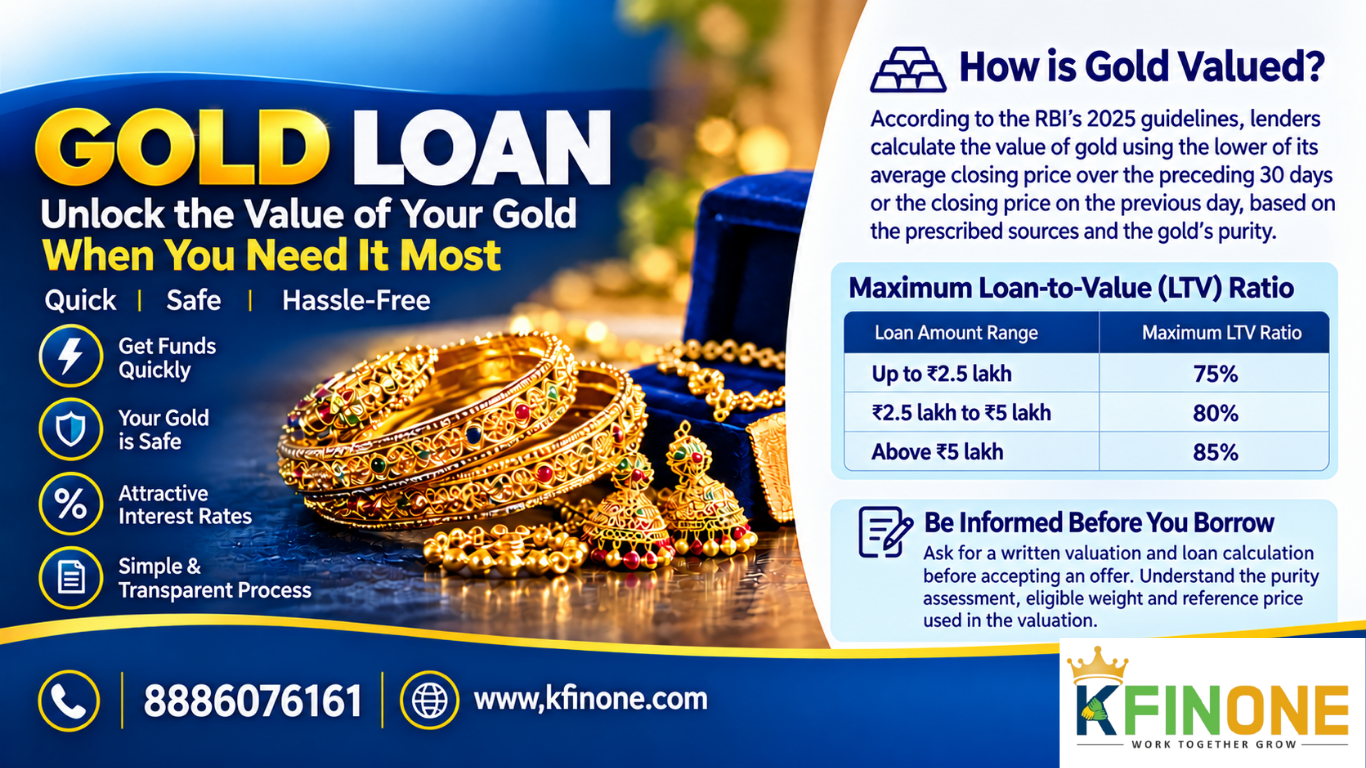
The loan-to-value (LTV) ratio represents the loan amount in relation to the assessed value of the pledged gold. It helps determine how much a lender can offer against eligible collateral. The Reserve Bank of India’s gold and silver collateral lending rules, effective April 1, 2026, specify the following maximum loan-to-value (LTV) ratios for eligible consumption loans.
These are regulatory ceilings, not guaranteed offers. Actual loan amounts may be lower based on the lender's assessment, product terms, and applicable requirements. For example, if eligible gold is valued at ₹1,00,000, an 85% LTV ceiling could permit a loan of up to ₹85,000 for a qualifying loan in the lowest slab, subject to the lender's assessment and applicable rules.
How to Determine Your Eligible Gold Loan Amount
Borrowers can make a preliminary estimate by considering three factors:
- Eligible gold weight: The net weight of the gold content after excluding stones and other non-gold materials.
- Applicable gold valuation: The reference price used by the lender for the gold's actual purity.
- Permissible LTV: The maximum proportion of the assessed value that may be lent under the applicable rules.
As per the RBI’s 2025 guidelines, lenders determine gold’s value by considering the lower of the average closing price recorded over the past 30 days and the closing price on the previous day, in line with the prescribed valuation sources and gold purity. The final amount may also depend on interest, charges, and the lender's product conditions. Request a detailed written statement of the gold valuation and eligible loan amount before agreeing to the lender’s offer.
Tips to Get a Better Gold Loan Valuation in 2026
Borrowers can follow several simple steps to prepare before using their gold jewellery as collateral for a loan. Compare multiple lenders: Request quotations from banks and regulated non-banking financial companies (NBFCs). Compare valuation methods, interest rates, fees, and repayment conditions. Check the Gold Valuation: Confirm the jewellery’s purity, net eligible weight, and reference gold price used by the lender to calculate its value.
Check all charges: Processing fees, applicable taxes, and other charges can affect the net amount received and total repayment cost. Choose a manageable loan amount: Borrow only what you need instead of automatically taking the maximum amount available. Plan repayment carefully: Understand when principal and interest are due and what happens if you miss a payment. Your pledged gold may be at risk if you default.
Conclusion
Gold prices can significantly influence the amount you may borrow against jewellery, but market prices alone do not determine the final loan offer. Gold purity, eligible weight, the lender's valuation method, and the applicable LTV limit all play important roles.
In 2026, borrowers should understand the current gold loan rules, compare lenders, and review the total borrowing cost before pledging their jewellery. A well-informed decision can help you access funds while protecting your financial stability and valuable assets.