
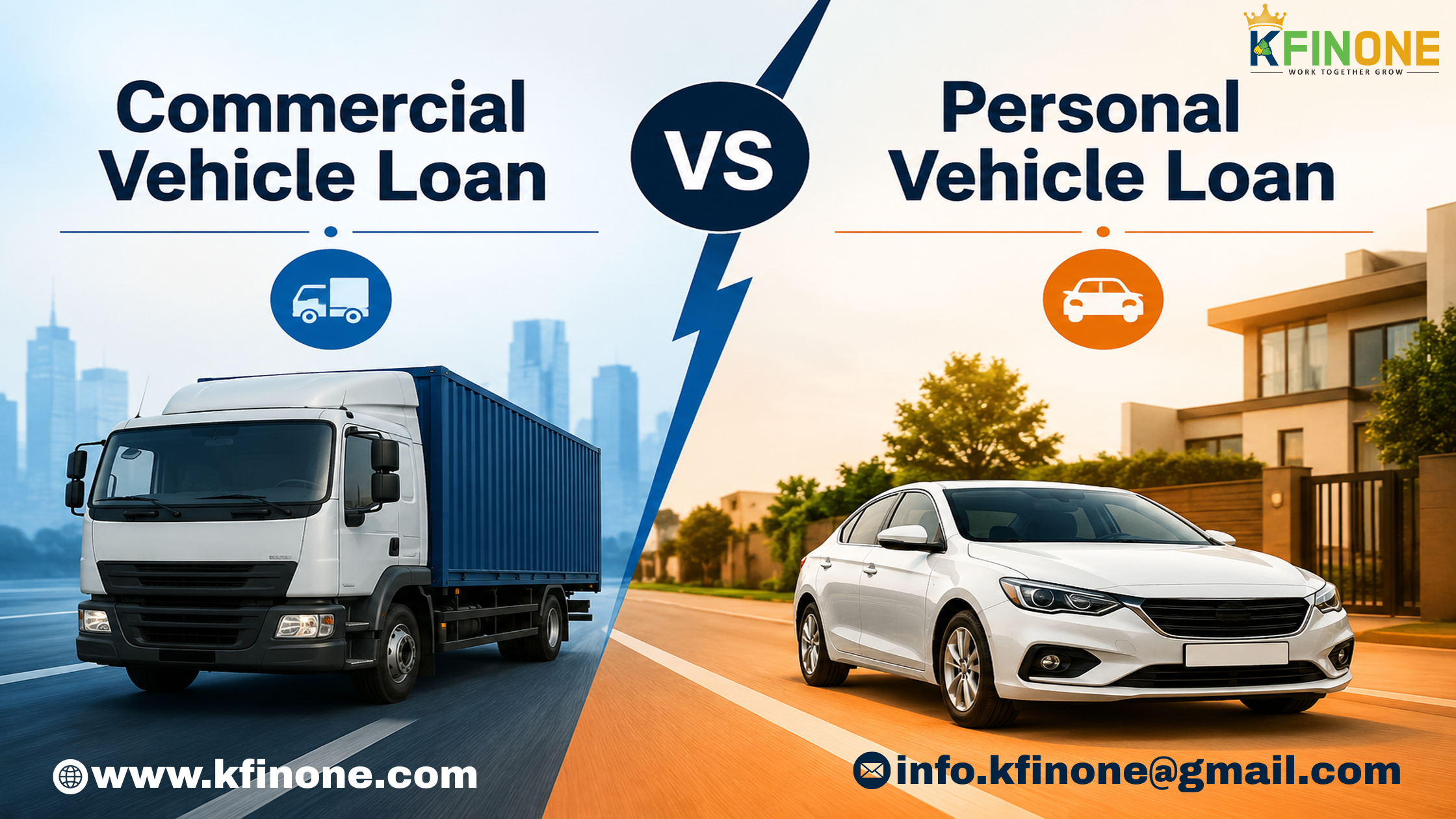
Commercial Vehicle Loan vs Personal Vehicle Loan: What’s the Difference?
Buying a vehicle can be a major financial decision, especially when the vehicle is intended for business or personal use. While both commercial vehicle loans and personal vehicle loans help borrowers finance vehicle purchases, they are designed for different purposes and may have different eligibility requirements, repayment structures, and documentation needs.
Understanding the difference between these two loan types can help you choose financing that matches your vehicle usage and financial situation.
What Is a Commercial Vehicle Loan?
A commercial vehicle loan is designed to finance vehicles used primarily for business or income-generating activities. These loans can be useful for transport operators, logistics businesses, delivery services, contractors, and self-employed individuals who depend on vehicles for their work.
Depending on the lender and loan terms, financing may be available for vehicles such as:
- Trucks and mini-trucks
- Buses and passenger vehicles
- Taxis and commercial cars
- Light commercial vehicles
- Heavy commercial vehicles
- Goods carriers
- Construction and specialised vehicles
The financed vehicle is generally expected to be registered and used for commercial purposes according to applicable regulations.
What Is a Personal Vehicle Loan?
A personal vehicle loan is generally taken to purchase a vehicle for private or family use. It is commonly used for buying cars, SUVs, or other vehicles meant primarily for personal transportation.
For example, an individual may take a personal vehicle loan to purchase a car for commuting to work, travelling with family, or meeting everyday transportation needs.
Unlike a commercial vehicle loan, the vehicle is not primarily intended to generate business income.
Key Differences Between Commercial and Personal Vehicle Loans
The biggest difference between these loans is the purpose of the vehicle.
A commercial vehicle loan is intended for business or income-generating use, while a personal vehicle loan is generally intended for personal transportation.
1. Purpose of the Loan
Commercial vehicle loans are designed around business requirements. A transporter may use the loan to purchase a truck, while a delivery business may finance a goods carrier to expand its operations.
Personal vehicle loans, on the other hand, are generally used by individuals purchasing vehicles for personal or family requirements.
Choosing a loan based on the actual purpose of the vehicle is important because lenders may have different financing products for commercial and personal use.
2. Types of Vehicles Financed
Commercial vehicle loans can cover a wider range of business-oriented vehicles. Depending on the lender's policies, these may include heavy trucks, buses, taxis, vans, goods carriers, and other commercial vehicles.
Personal vehicle loans are more commonly associated with privately used cars, SUVs and similar passenger vehicles.
Therefore, the type of vehicle you want to purchase can help determine which loan category is appropriate.
3. Eligibility Requirements
Eligibility criteria can differ considerably between the two loan types.
For a personal vehicle loan, lenders may primarily consider factors such as:
- Age
- Income
- Employment status
- Credit history
- Existing financial obligations
- Repayment capacity
For a commercial vehicle loan, lenders may additionally evaluate the borrower's business or professional background. Factors can include business experience, income generated from commercial activities, existing vehicle ownership, banking history, and repayment capacity.
The exact requirements vary between lenders.
4. Documentation
Personal vehicle loan applications may require relatively straightforward documents such as identity proof, address proof, income documents, and bank statements.
Commercial vehicle financing may involve additional documentation related to the business or commercial activity. Depending on the lender and applicant profile, documents could include business registration documents, bank statements, income-tax records, GST-related documents, vehicle-related papers, and proof of business experience.
Applicants should check the lender's current documentation requirements before applying.
5. Loan Amount
The loan amount depends on several factors, including the vehicle's price, the applicant's financial profile, down payment, income and the lender's policies.
Commercial vehicles can sometimes have significantly higher purchase prices than personal cars. As a result, commercial vehicle financing may involve larger loan requirements, particularly when businesses are purchasing expensive trucks, buses or multiple vehicles.
However, the actual amount approved is determined by the lender after evaluating the application.
6. Repayment Tenure
The repayment period can vary based on the lender, vehicle type, loan amount and borrower profile.
Commercial vehicle loans may offer repayment structures designed around the cash flow patterns of businesses and transport operators. Personal vehicle loans may have repayment periods suited to individual borrowers.
Before choosing a tenure, borrowers should consider whether the monthly EMI fits comfortably within their regular income or business cash flow.
7. Interest Rates
Interest rates are another important consideration.
The applicable rate can depend on factors such as credit history, borrower profile, vehicle type, loan amount, tenure, income, business stability and lender policies.
A commercial vehicle loan should not be selected solely based on the advertised interest rate. Borrowers should also consider processing fees, documentation charges, foreclosure conditions and other applicable costs.
Similarly, personal vehicle loan applicants should compare the overall borrowing cost rather than focusing only on the headline interest rate.
Which Loan Is Better for You?
There is no universal answer because the right option depends mainly on how you plan to use the vehicle.
A commercial vehicle loan may be more suitable if:
- You are purchasing a vehicle for business purposes.
- The vehicle will generate income.
- You operate a transport or logistics business.
- You need a truck, bus, taxi or goods carrier.
- You are expanding an existing commercial fleet.
A personal vehicle loan may be more appropriate if:
- You are purchasing a vehicle for private use.
- The vehicle will primarily be used by you or your family.
- You need a car for commuting or personal travel.
- You do not intend to use the vehicle as a commercial asset.
Things to Consider Before Applying
Before submitting a loan application, evaluate your financial capacity and vehicle requirements carefully.
Check your repayment capacity: Calculate how much EMI you can comfortably afford without putting pressure on your monthly budget or business cash flow.
Compare lenders: Look at interest rates, loan tenure, processing charges and other applicable fees.
Consider the down payment: A larger down payment can reduce the amount you need to borrow, although it also requires greater upfront funds.
Review the total cost: Don't judge a loan only by its EMI. Consider interest and additional charges over the entire tenure.
Check eligibility: Make sure you meet the lender's income, credit, business and documentation requirements before applying.
Final Thoughts
Commercial vehicle loans and personal vehicle loans serve different financial purposes. A commercial vehicle loan is generally intended for vehicles used to support business or income-generating activities, while a personal vehicle loan is designed primarily for private transportation.
The best choice depends on the type of vehicle you are purchasing, how you intend to use it, your income or business profile, and your repayment capacity. Comparing available financing options carefully can help you select a loan that aligns with your requirements and financial goals.
Before taking any vehicle loan, review the lender's terms, applicable charges, eligibility conditions and repayment schedule to make an informed borrowing decision.