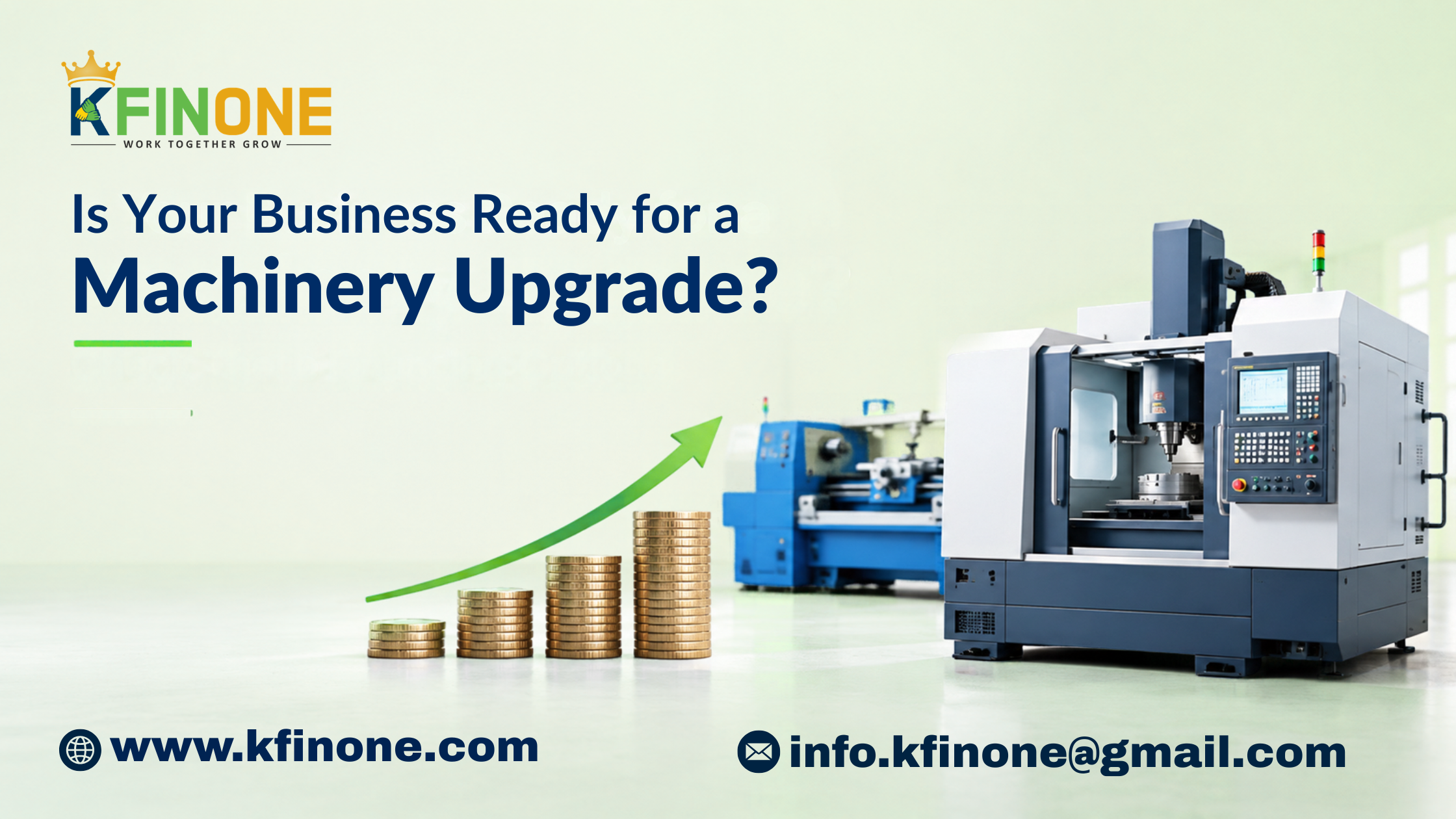
Is Your Business Ready for a Machinery Upgrade? Check These Financing Options
For many businesses, machinery is more than just equipment it plays an important role in production, efficiency, quality, and growth. As technology continues to evolve, older machines can become less efficient, require frequent maintenance, or limit a business’s ability to meet increasing customer demand. Upgrading to modern machinery can help businesses improve operations and prepare for future growth.
However, purchasing new machinery can require a significant investment. Instead of using a large portion of business savings or disturbing day-to-day cash flow, business owners can explore different financing options, including machinery loans, to fund their equipment requirements.
Why Should Businesses Consider a Machinery Upgrade?
Businesses may consider replacing or upgrading machinery for several reasons. Older equipment can increase maintenance expenses and consume more time and resources. In some industries, outdated machinery may also affect production capacity and product quality.
Modern equipment can offer improved speed, automation, accuracy, and operational efficiency. For a growing business, the right machinery upgrade may also make it easier to handle larger orders and explore new products or services.
A machinery upgrade can therefore be considered not only as an expense but also as an investment in improving business operations.
What Is a Machinery Loan?
A machinery loan is a type of business financing designed to help eligible businesses purchase equipment or machinery. Depending on the lender and loan product, financing may be available for new machinery, specific types of equipment, or other business-related assets.
Instead of paying the entire machinery cost upfront, a business can use financing and repay the borrowed amount through scheduled EMIs over the selected repayment period.
This approach can help businesses acquire essential equipment while keeping a portion of their available funds for working capital and regular operating expenses.
Financing Options to Consider for Machinery Purchase
Business owners can explore different ways to finance an equipment upgrade. The suitable option can depend on the machinery cost, business cash flow, repayment capacity, and lender requirements.
1. Machinery Loan
A dedicated machinery loan can be considered when the primary requirement is purchasing business equipment. It can provide access to funds specifically for acquiring machinery without requiring the business to use all its available cash reserves.
Before applying, businesses should compare interest rates, processing charges, repayment tenure, eligibility criteria, documentation requirements, and other applicable terms.
2. Business Term Loan
A business term loan may provide financing for broader business requirements, including expansion, equipment purchases, renovation, or other planned investments.
This option may be useful for businesses that require funds for machinery along with other expansion-related expenses. However, the exact usage conditions depend on the lender and loan agreement.
3. Equipment Financing
Some lenders and financial institutions offer financing solutions specifically for equipment purchases. Such financing may be structured around the purchase of particular machinery or equipment.
4. Using Business Savings
Using internal funds is another way to purchase machinery. Paying from business savings can avoid borrowing costs, but it can also reduce the amount of money available for salaries, inventory, rent, supplier payments, emergencies, and other working capital requirements.
For this reason, businesses should assess their cash reserves carefully before making a large equipment purchase.
5. Equipment Leasing
Leasing can allow a business to use machinery without purchasing the equipment outright. Instead, the business generally makes periodic payments according to the lease agreement.
This may be considered by businesses that want access to equipment while avoiding a large initial purchase expense. The ownership structure and end-of-lease options depend on the agreement.
Benefits of Financing a Machinery Upgrade
Choosing appropriate financing can provide several potential advantages for a growing business.
Preserves Working Capital: Financing the machinery purchase can help a business avoid using a large portion of its operational cash at once.
Supports Business Expansion: Additional machinery can increase production capacity and help businesses respond to higher demand.
Improves Productivity: Modern equipment may offer better speed, automation, precision, and efficiency compared with older machinery.
Helps Manage Cash Flow: Repaying the financed amount through scheduled EMIs can make the cost easier to incorporate into a business’s financial planning.
Enables Technology Upgrades: Financing can help businesses invest in modern equipment when the upfront purchase cost is substantial.
What Should You Check Before Applying?
A machinery purchase should be supported by proper financial planning. Before applying for financing, business owners should estimate the total cost of the machinery, including transportation, installation, taxes, maintenance, and other related expenses.
It is also important to calculate the expected increase in production or revenue and compare it with the proposed repayment obligations. Businesses should avoid taking financing that places excessive pressure on monthly cash flow.
Lenders may consider factors such as business vintage, turnover, profitability, credit history, existing financial obligations, and repayment capacity. Required documents may include business registration details, financial statements, bank statements, income-tax documents, KYC documents, and machinery quotations, depending on the lender.
New Machinery vs. Used Machinery
Businesses do not always need brand-new equipment. Used machinery can sometimes provide access to required technology at a lower purchase price. However, buyers should carefully assess the machine’s age, condition, maintenance history, remaining useful life, and expected repair costs.
Financing availability for used machinery can vary depending on the lender, equipment type, valuation, and other factors. Businesses should confirm the applicable terms before making a purchase decision.
Plan Your Machinery Upgrade Carefully
A machinery upgrade can be an important step for businesses looking to improve productivity and support long-term expansion. However, choosing the right equipment and financing structure is equally important.
A machinery loan or another suitable financing option can help businesses acquire essential equipment while managing their available working capital. Before making a decision, compare financing costs, repayment terms, eligibility requirements, and the expected business benefits.
With careful planning, the right machinery investment can help a business strengthen its operations today while preparing for future opportunities.