Understanding Loan-to-Value (LTV) in Commercial Vehicle Financing
A commercial vehicle is a valuable asset for businesses involved in transportation, logistics, construction, delivery services, and passenger transport. Whether you're purchasing a truck, bus, pickup van, or heavy commercial vehicle, financing can make the investment more affordable. Loan-to-Value (LTV) is one of the key financial terms you should understand before applying for a commercial vehicle loan.
Understanding the Loan-to-Value ratio can help you estimate your loan amount, plan your down payment, and make informed financial decisions. In this guide, we'll explain what LTV means, how it is calculated, why it matters, and how it affects your commercial vehicle loan.
What is Loan-to-Value (LTV)?
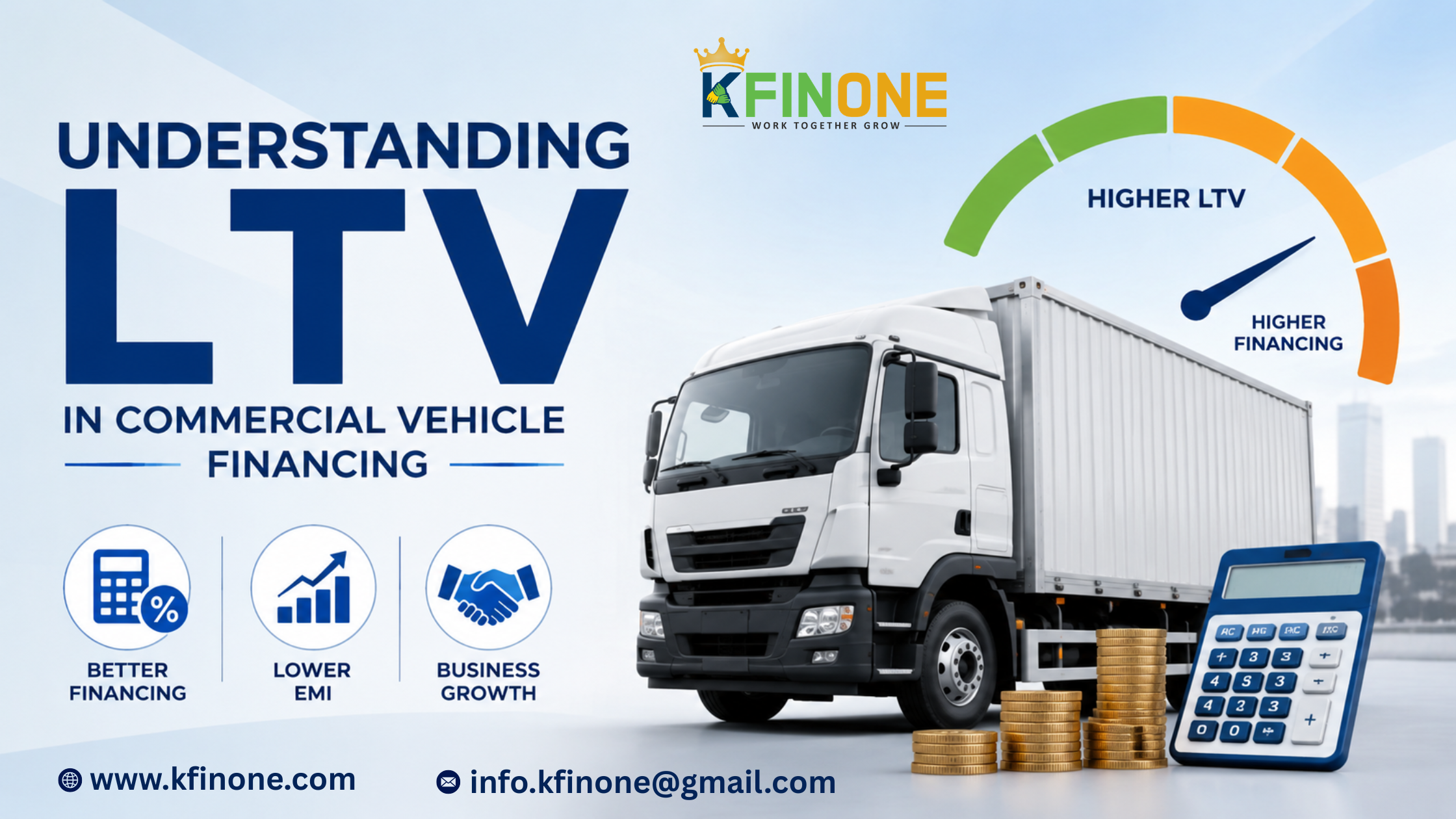
Loan-to-Value (LTV) is the percentage of a vehicle's value that a lender is willing to finance. It compares the loan amount to the purchase price or market value of the commercial vehicle.
A higher LTV means the lender finances a larger portion of the vehicle's cost, while a lower LTV means you need to pay a larger down payment.
Formula for Loan-to-Value (LTV)
LTV = (Loan Amount ÷ Vehicle Value) × 100
Example
Suppose you plan to purchase a commercial truck worth ₹20,00,000.
- Vehicle Cost: ₹20,00,000
- Loan Amount: ₹16,00,000
LTV = (16,00,000 ÷ 20,00,000) × 100 = 80%
This means the lender is financing 80% of the vehicle's value, while you contribute the remaining 20% as a down payment.
Why is LTV Important?
The Loan-to-Value ratio plays a significant role in determining the loan terms offered by the lender. It influences:
- Maximum loan amount
- Down payment requirement
- Interest rate
- Loan approval chances
- Overall borrowing cost
Knowing the LTV helps borrowers understand how much funding they can expect before applying.
How Lenders Determine the LTV Ratio
Financial institutions consider several factors before deciding the LTV percentage.
Vehicle Type
Different vehicles may qualify for different financing limits.
Examples include:
- Light Commercial Vehicles (LCVs)
- Heavy Commercial Vehicles (HCVs)
- Buses
- Trucks
- Tippers
- Mini trucks
- Pickup vehicles
New vs Used Vehicle
New commercial vehicles generally qualify for higher LTV ratios because they retain value better.
Used vehicles may receive lower financing depending on:
- Age
- Condition
- Market demand
- Expected resale value
Applicant's Credit Profile
Borrowers with:
- Good credit history
- Stable income
- Strong repayment capacity
are more likely to receive favorable LTV terms.
Business Stability
For business owners, lenders often review:
- Business age
- Annual turnover
- Profitability
- Existing loans
- Cash flow
Established businesses generally receive better financing offers.
Typical LTV Range for Commercial Vehicle Loans
Although the exact percentage varies between lenders, commercial vehicle loans commonly finance 70% to 90% of the vehicle's value.
The remaining amount is usually paid as the borrower's contribution.
Benefits of a Higher LTV
A higher Loan-to-Value ratio offers several advantages.
Lower Initial Investment
You need less money upfront, making it easier to purchase the vehicle.
Better Cash Flow
Businesses can preserve working capital for:
- Fuel expenses
- Maintenance
- Salaries
- Insurance
- Daily operations
Faster Business Expansion
Higher loan financing enables businesses to purchase commercial vehicles sooner without waiting to build substantial savings.
Benefits of a Lower LTV
Some borrowers intentionally choose a lower LTV.
Advantages include:
- Lower monthly EMI
- Reduced interest cost
- Faster loan repayment
- Lower financial burden
- Improved long-term savings
Factors That Can Improve Your LTV Eligibility
To improve your chances of securing a higher loan amount, follow these helpful steps.
Maintain a Good Credit Score
A healthy repayment history increases lender confidence.
Pay a Reasonable Down Payment
Although higher LTV reduces upfront costs, making a slightly larger down payment may help secure better loan terms.
Submit Complete Documentation
Common documents include:
- Identity proof
- Address proof
- Income proof
- Business proof
- Bank statements
- GST documents (if applicable)
- Vehicle quotation
Accurate documentation speeds up loan processing.
Choose the Right Vehicle
Vehicles with strong resale value are generally easier to finance.
How LTV Affects Your EMI
The loan amount directly impacts your EMI.
For example:
Option 1
Vehicle Price: ₹15,00,000
Loan Amount: ₹13,50,000 (90% LTV)
Down Payment: ₹1,50,000
Monthly EMI will be relatively higher.
Option 2
Vehicle Price: ₹15,00,000
Loan Amount: ₹12,00,000 (80% LTV)
Down Payment: ₹3,00,000
Monthly EMI will generally be lower.
Choosing the right balance between down payment and loan amount helps manage your finances effectively.
Mistakes to Avoid
When applying for a commercial vehicle loan, avoid these common mistakes:
- Borrowing more than your repayment capacity.
- Consider the total cost of the loan, including interest charges and applicable fees, before making a decision.
- Not comparing loan offers from multiple lenders.
- Overlooking processing charges and insurance costs.
- Choosing a repayment tenure that strains your monthly budget.
Planning carefully can help you avoid unnecessary financial stress.
Tips for Choosing the Right LTV
Before finalizing your loan:
- Assess your monthly repayment capacity.
- Keep enough funds available for business operations.
- Compare loan offers from different lenders.
- Understand all charges associated with the loan.
- Select a repayment tenure that fits your income cycle.
- Read the loan agreement carefully before signing.
A well-planned financing decision can improve both business growth and financial stability.
Conclusion
Loan-to-Value (LTV) is one of the most important factors in commercial vehicle financing because it determines how much of your vehicle's cost can be financed by the lender. A suitable Loan-to-Value (LTV) ratio minimizes the upfront financial burden, enabling businesses to invest in commercial vehicles that support their growth.
Before applying for a commercial vehicle loan, evaluate your budget, compare financing options, and choose an LTV that aligns with your repayment capacity. By understanding how LTV works, you can make informed borrowing decisions, maintain healthy cash flow, and support the long-term success of your business.