How to Finance New and Used Machinery Without Affecting Working Capital
For many businesses, machinery is essential for increasing production, improving efficiency, and maintaining competitiveness. However, purchasing new or used equipment can require a significant amount of capital. Using a large portion of available business funds for machinery may reduce the money available for daily operating expenses, inventory, salaries, and other working capital requirements.
A machinery loan can provide a practical way to finance equipment while helping businesses maintain healthy cash flow. Whether you are purchasing brand-new machinery or upgrading with quality used equipment, choosing the right financing approach can help you manage both your investment and working capital effectively.
Why Machinery Financing Is Important for Businesses
Machinery often represents a major business investment. Paying the entire purchase price upfront can put pressure on available funds, particularly for small and medium-sized businesses.
With machinery financing, businesses can spread the cost of equipment through structured repayments instead of using a large amount of cash at once. This allows the business to preserve liquidity while investing in productive assets.
The additional cash can continue to support expenses such as:
- Raw material purchases
- Employee salaries
- Rent and utilities
- Inventory management
- Marketing and expansion
- Supplier payments
- Routine maintenance
Consider a Machinery Loan Instead of Using Business Savings
One of the simplest ways to protect working capital is to avoid paying the entire machinery cost from existing business funds.
A machinery loan allows the business to finance the purchase and repay the borrowed amount over an agreed tenure. This can reduce the immediate financial burden and leave more funds available for regular operations.
Before applying, businesses should compare interest rates, processing charges, repayment tenure, loan amount, and other applicable costs to select suitable financing.
Financing New Machinery
New machinery can offer businesses access to the latest technology, improved production capacity, and better operational efficiency. However, advanced equipment can also involve a substantial upfront investment.
A machinery loan can help businesses acquire new equipment without making a large one-time payment.
Benefits of Financing New Machinery
- Access to modern technology
- Improved production efficiency
- Increased business capacity
- Reduced dependence on outdated equipment
- Better long-term operational performance
- Preservation of working capital
Businesses should evaluate whether the expected increase in productivity and revenue justifies the cost of the new machinery.
Financing Used Machinery
Used machinery can be a cost-effective alternative for businesses that want to expand without making a very large investment. Depending on the equipment's age, condition, brand, maintenance history, and market value, used machinery may cost considerably less than new equipment.
Financing used machinery can allow businesses to acquire necessary equipment while keeping their initial cash requirement manageable.
However, businesses should carefully inspect the machinery before purchasing it. Maintenance records, remaining useful life, equipment condition, resale value, and availability of spare parts should all be considered.
How to Protect Working Capital While Buying Machinery
1. Calculate the Total Cost
Do not consider only the purchase price. Include transportation, installation, insurance, maintenance, taxes, and other related expenses when estimating the total investment.
Understanding the complete cost can help you determine the appropriate financing requirement.
2. Make a Realistic Down Payment
A down payment can reduce the amount borrowed, but using too much of your available cash may defeat the purpose of protecting working capital.
Businesses should choose a down payment that balances loan affordability with cash-flow requirements.
3. Choose a Comfortable Repayment Tenure
A shorter tenure may help reduce the overall interest burden but can result in higher periodic payments. A longer tenure can make repayments more manageable but may increase the total interest paid.
Choose a tenure that fits your expected business cash flow rather than selecting an option solely based on the lowest monthly payment.
4. Match EMI With Expected Cash Flow
Before taking a machinery loan, estimate your monthly business income and expenses. The repayment should fit comfortably within the expected cash flow.
Businesses should also maintain sufficient reserves for unexpected expenses instead of allocating all surplus funds toward loan repayment.
5. Compare Financing Options
Different lenders may offer different loan amounts, interest rates, repayment periods, and eligibility requirements.
Comparing available options can help businesses find financing that aligns with their budget, equipment cost, and repayment capacity.
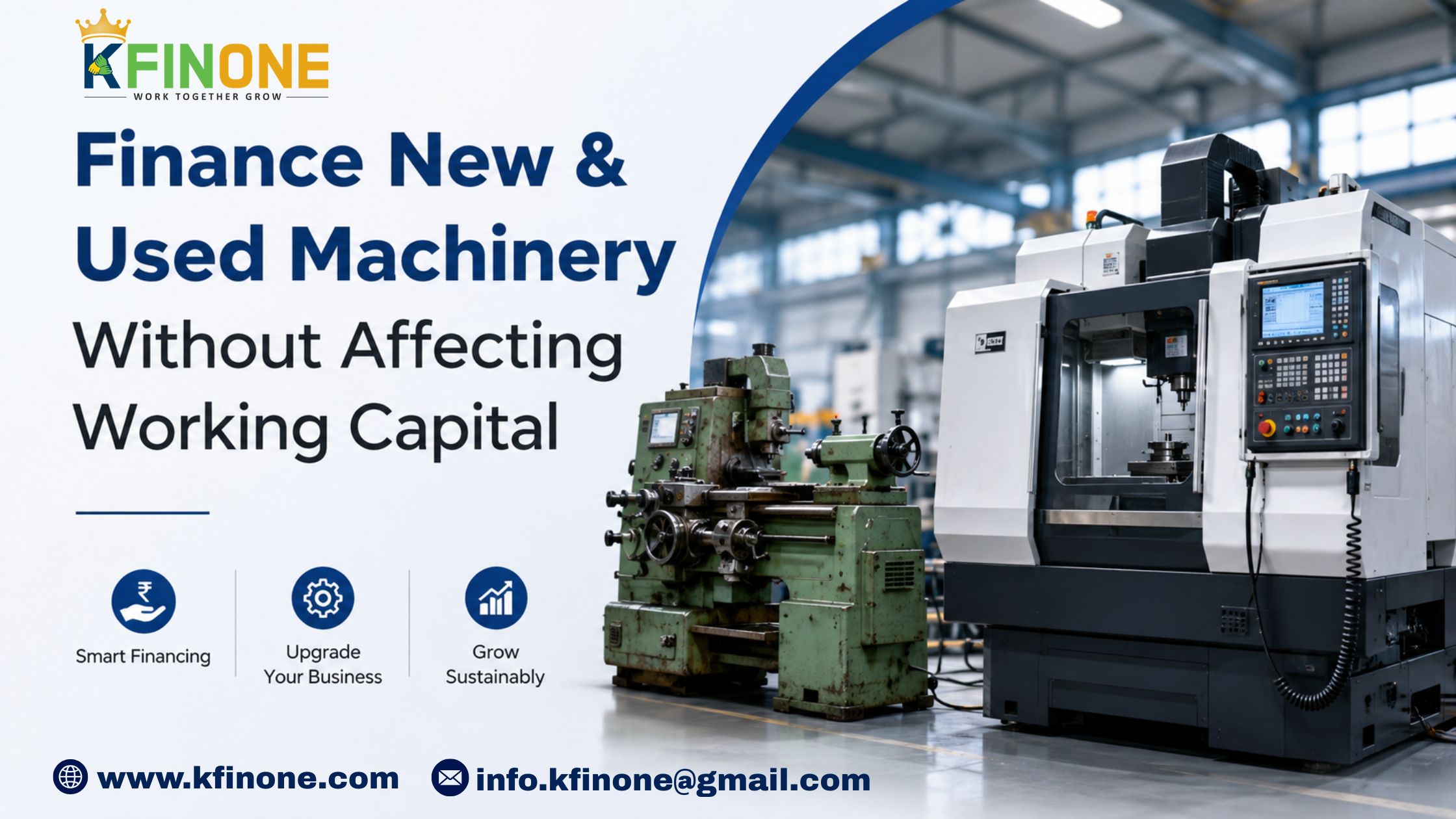
New vs Used Machinery: Which Is Better?
The choice between new and used machinery depends on the business's requirements, budget, and long-term goals.
New Machinery
- Higher Initial Cost: New machinery generally requires a larger investment.
- Latest Technology: It may include advanced features and modern technology.
- Lower Initial Maintenance: New equipment usually requires fewer repairs in the early years.
- Longer Useful Life: New machinery typically offers a longer operating life.
- Higher Financing Requirement: The larger purchase price may require a higher loan amount.
- Ideal for Long-Term Growth: It can be suitable for businesses planning major expansion or modernization.
Used Machinery
- Lower Purchase Cost: Used machinery is generally more affordable than new equipment.
- Cost-Effective Option: It can help businesses acquire necessary equipment while limiting the initial investment.
- Existing Technology: The available features depend on the machinery's model, age, and condition.
- Potentially Higher Maintenance: Older equipment may require more frequent repairs or replacement parts.
- Shorter Remaining Life: Its useful life depends on previous usage and maintenance.
- Suitable for Budget-Conscious Businesses: Used machinery can be a practical option for businesses looking to expand while managing their cash flow.
How Machinery Loans Can Support Business Growth
A well-planned machinery loan can allow a business to invest in productive assets without significantly reducing its operating cash reserves.
For example, a manufacturing business may use financing to purchase additional production equipment. Instead of spending its entire cash reserve on the machinery, the business can retain funds for raw materials, employee expenses, supplier payments, and other operational needs.
As the new equipment contributes to business activity, the resulting cash flow can support regular loan repayments.
Important Factors to Check Before Applying
Before applying for machinery financing, businesses should review:
- Loan eligibility requirements
- Interest rate and associated charges
- Maximum available loan amount
- Repayment tenure
- Down payment requirement
- Documentation requirements
- Prepayment or foreclosure conditions
- Condition and valuation of used machinery, where applicable
Having the required financial and business documents ready can also make the application process smoother.
Common Mistakes to Avoid
Businesses should avoid making financing decisions based only on the advertised loan amount or monthly repayment.
Some common mistakes include:
- Borrowing more than the business can comfortably repay
- Using most working capital for the down payment
- Ignoring maintenance and installation costs
- Purchasing used machinery without proper inspection
- Choosing a long tenure without considering total interest
- Failing to compare different financing options
- Not maintaining an emergency cash reserve
Careful planning can help prevent machinery financing from becoming a burden on day-to-day operations.
Conclusion
Purchasing machinery can be an important step toward improving productivity and expanding a business. However, paying for equipment entirely from available funds can put pressure on working capital.
Machinery financing provides businesses with an opportunity to acquire new or used equipment while spreading the cost over manageable repayments. By calculating the total investment, selecting an appropriate down payment, comparing financing options, and choosing a repayment schedule that matches cash flow, businesses can invest in machinery while maintaining funds for everyday operations.
A carefully planned machinery loan can therefore help businesses balance asset investment, cash-flow management, and long-term growth.